
Spring Fling
Postal History Sunday #302

It’s the end of the month of May and, on our farm, this is a critical point of the growing season where we strive to get the vast majority of our vegetable crops into the ground. One unfortunate side-effect is that I often find myself struggling to get words onto the virtual paper this time of year.
I once had a teacher who told me the best way to get past “writer’s block” was to just start putting words down about whatever was currently on my mind. It didn’t matter if it was precisely on the required topic because you could use your momentum to get there eventually.
Well, all of the Spring things we are doing at the farm are most definitely on my mind. So, for this week’s Postal History Sunday we get a Spring Fling!
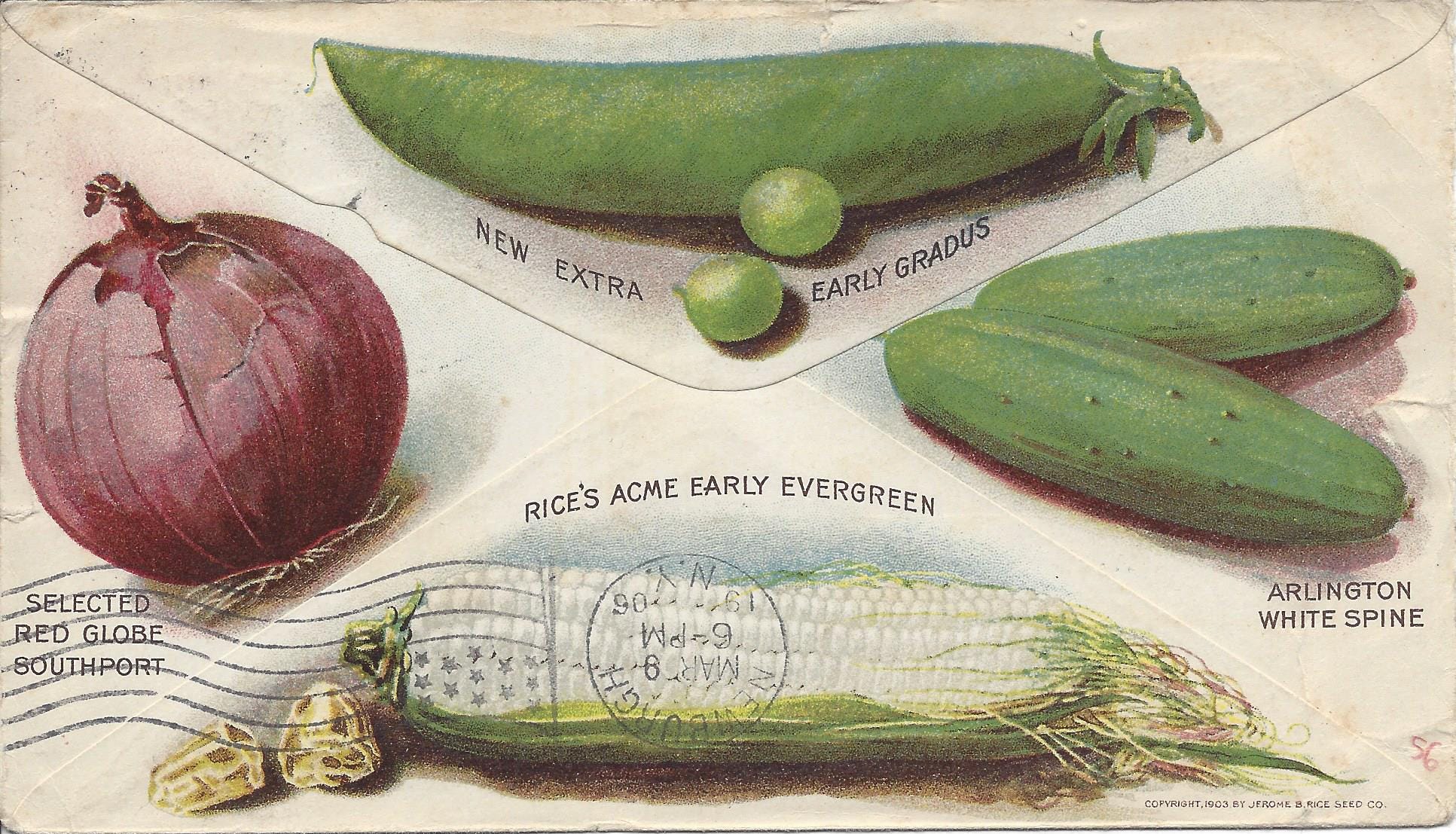
A thing for heirloom/heritage veggies
The Genuine Faux Farm is a small-scale, diversified farm that raises vegetables, fruit and poultry. Planting season for us actually starts as early as late January when we put onion seeds into trays so the young plants are ready to transplant in April or May. We have high tunnels (hoop buildings) that allow us to plant in the ground as early as late February (we didn’t do that this year). Our latest planting is usually in late August (and maybe early September) for crops we hope to overwinter or harvest in early winter in those same high tunnels.
Even so, the lion’s share of planting occurs in May. We measure our progress by a progression that has been part of our farm for years. The big onion and potato crops go in once the soil, and our available time, allow us to do so. Then, the brassicae (broccoli, cauliflower, etc)and winter squash are the next two big crops. Somewhere in there are beans, corn, cucumbers and whatever else we are growing.
While we grow many heirloom or heritage varieties, we have not tried a variety like Rice’s Acme Early Evergreen (sweet corn), shown on the envelope above. Probably the most similar variety we could try is Stowell’s Evergreen, which was introduced in 1848.
In today’s world, the word “evergreen” doesn’t bring to mind what the seed developer intended in the 1800s. At least for me, evergreen makes me think of coniferous trees. Thus, I am tempted to think that the corn kernals might be greenish (they are not). Or, if I put on my advocacy hat, an evergreen article is one that is still relevant at a time other than the moment it was written.
The second is probably closer to the intention of the name for sweet corn. In this case, evergreen referenced the fact that this corn had the ability to be stored for long periods of time and still be edible.
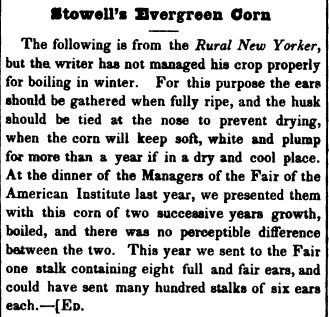
We can guess that Rice’s Early Acme Evergreen was also a storage sweet corn that probably touted an earlier maturity date than Stowell’s.
Now that I’ve used the back of a cover to get started, I think we’ll do just fine today. I should probably mention that those who would like to read more about the 1906 envelope shown above, I suggest you visit Postal History Sunday #195. Yes, that’s a tease, because I’m not showing you the front of that cover in this article.
An Artificial Intelligence (AI) sidebar thing
This seems like a good time for me to state clearly, that I do not use generative Artificial Intelligence for any of my writing. It has, sadly, gotten nearly impossible to perform web searches without AI. But I do want to point out exactly HOW EASY it is for AI to push the wrong agenda or answer and why you should always be skeptical and check things diligently and carefully.
I wanted to find the original article that was cited by Victory Seed in their description of Stowell’s Evergreen. What follows is the AI summary to my search inquiry “November 1850 Working Farmer magazine:”
“The November 1850 issue of The Working Farmer, edited by Professor James J. Mapes, is historically significant for introducing "Stowell's Evergreen Sweet Corn" to the American public. Mapes lauded…”
It’s a perfect example a lazy answer.
And a perfectly unhelpful answer. I was hoping to see if I could locate an electronic copy of the original periodical - not an editorial about the supposed relevance or “historical significance” of that particular issue.
Instead, the AI summary came up with the same source I had already located and then extemporized that the reason this issue was important was because someone (Victory Seed) had quoted it with regards to Stowell’s Evergreen. And now, since I’ve mentioned it here, I bet the AI will double down on this conclusion.
Heck, I could have accepted the lazy answer myself and just snagged Victory Seed’s interpretation and citation for myself. But I don’t want to do that, I want to verify and validate so I don’t perpetuate misinformation.
Clearly, this AI tool (Google’s) isn’t all that concerned about that problem and is working very hard to push the sloppy answers.
When Hubbard-type squash became a thing
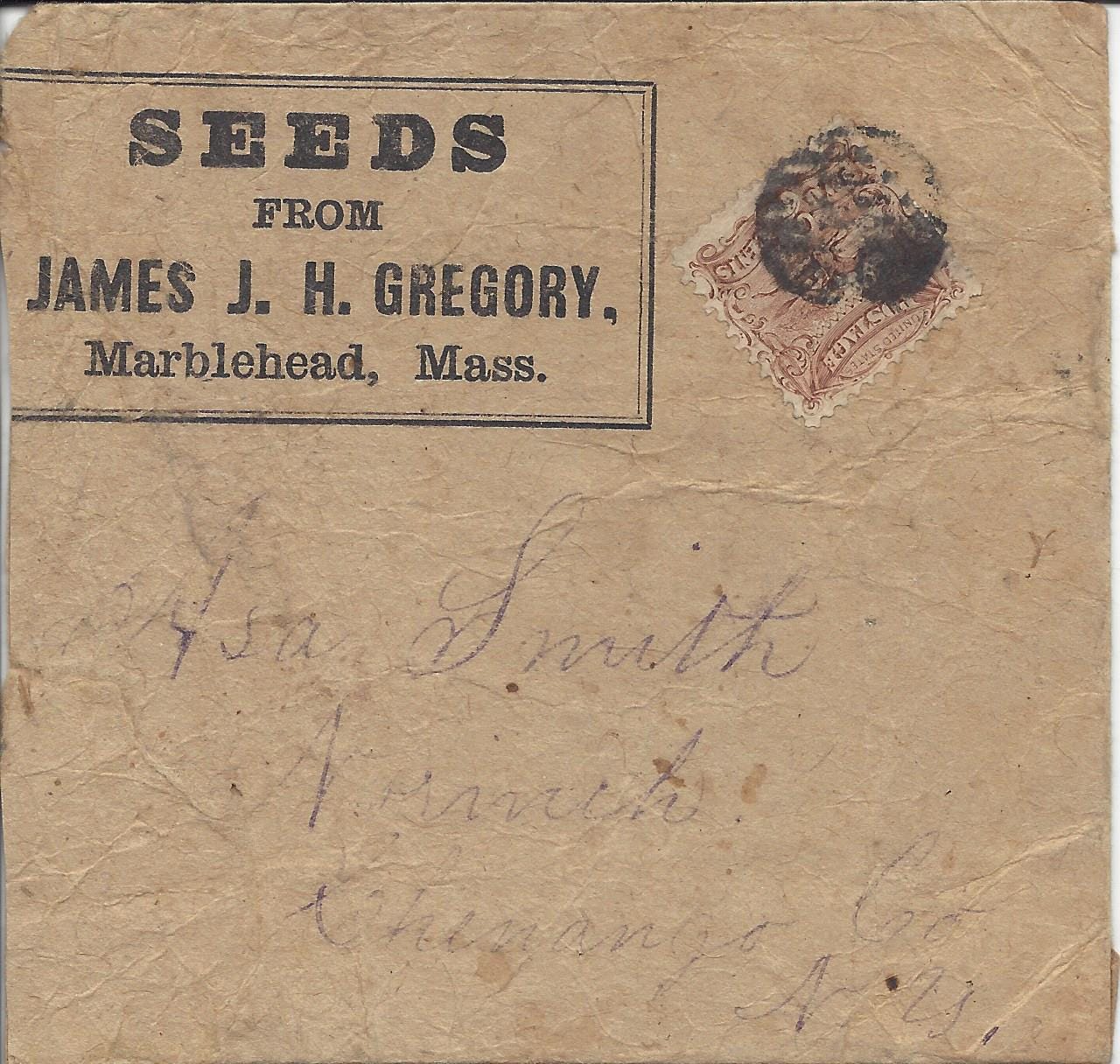
I’ve shown this cover before, but I keep digging out new details. Since this item most certainly connects with today’s theme, I’ll share a bit more about it.
The envelope clearly carried seeds from the J.H. Gregory seed company to Asa Smith located near Norwich, NY. There are no dates on this envelope, but we are given a couple of clues. First, it is likely that Smith had ordered seeds for the growing season and it would be normal to receive those seeds as early as January and maybe into April. And second, I know when the postage stamp on this cover was first made available to the public.
The 2 cent “Post Horse and Rider” was first issued in March of 1869, which gives us the earliest point this envelope could have been mailed. A new postage stamp design was issued in April of 1870 that featured Andrew Jackson. This effectively limits the period of time this Post Horse and Rider stamp would have been commonly used (referred to as a common use period). That makes it fairly safe to say that this envelope could have been mailed as early as 1869 and probably no later than 1871.
During that time period, seeds, cuttings and other plant matter was considered mailable matter in the third class. As such, the postage rate was 2 cents per 4 ounces in weight. Speaking from experience, it would have been difficult to put more than four ounces of seeds into this envelope. For example, squash are some of the largest vegetable seeds. It would take an average of 130 Hubbard-type squash seeds for a single ounce. Most seeds are much smaller, so it would take a fairly large order to require a second rate of postage.
So, it makes perfect sense that 2 cents was sufficient postage for this envelope of seeds.
I actually selected Hubbard squash as an example of size for a reason. James J.H. Gregory is credited with introducing this type of squash to the seed industry in the 1850s. And while there is no way to know what sorts of seeds were sent in this particular envelope, it feels good to pretend that these larger, flat seeds were carried through the mail to Mr. Asa Smith for his use.
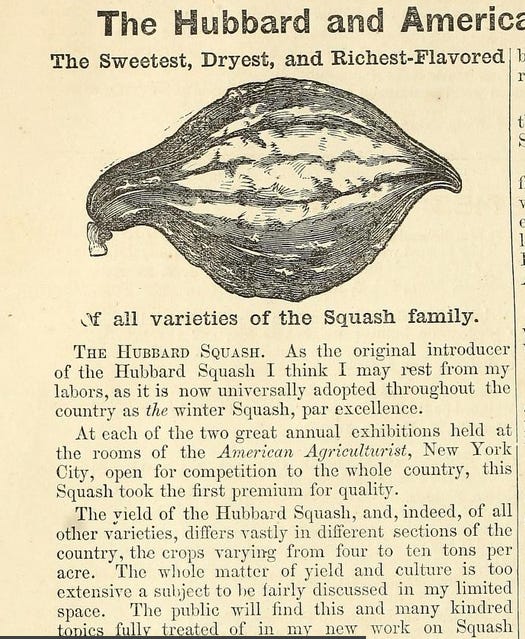
Even Gregory admits in his own catalog (1871) that his Hubbard squash performed differently for various locations and growing conditions. Any good horticulturist or seed producer is going to recognize that one piece of land will perform differently from the next with any given vegetable.
At their best, some Hubbard varieties can easily reach 30 to 40 pounds in weight and they sport an extremely tough shell. These squash are known to store well for a very long period of time. In fact, they typically taste better if you allow them to store for months before eating them.
This isn’t quite a thing
And now we get to a problem cover that has been sitting with me for quite a long time.
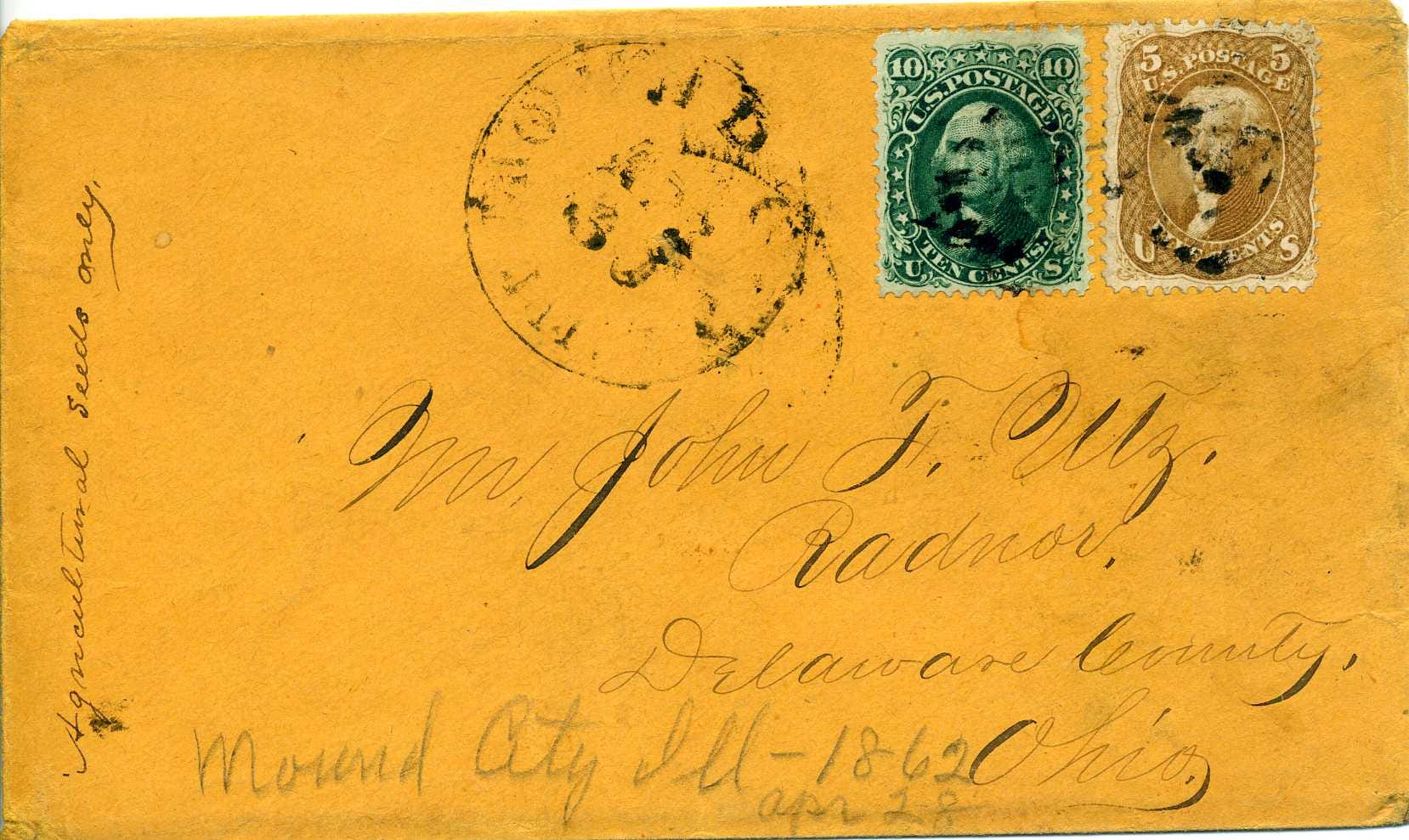
This envelope was mailed from Mound City, Illinois on April 30 to John F. Utz of Radnor, Ohio. A docket in pencil tells us that the item was mailed April 28, 1862. I have no particular reason to doubt the dates on this docket. I suspect there were some contents that included the April 28, 1862 date and the recipient wrote this information on the envelope as part of their personal filing system.
There are two postage stamps from the 1861 US issue on the cover. One is denominated for 10 cents in postage while the second represented 5 cents - for a total of 15 cents paid.
This cover fits today’s topic because of the docket on the left side of the cover that reads: Agricultural seeds only.
The only reason a person would put that docket on an envelope would be to take advantage of a cheaper postage rate. And that rate was outlined in Section 13 of the 1861 Postal Act (Congress).

Packages of seeds and cuttings could not exceed eight ounces in weight. The postage rate was one cent per ounce (or fraction of an ounce) if the origin and destination were under 1500 miles apart. If they were over that distance, the cost was 2 cents per ounce.
In order to have the seeds/cuttings rate honored, the envelope needed to be clearly marked, just as this envelope was. Unlike printed matter, which had to be unsealed so postal clerks could inspect them, seeds and cuttings were to be sealed (for obvious reasons). But postal clerks maintained the right to open and inspect such items if they felt it was warranted.
The only written content allowed with the seeds would have been an address and description of the contents. Or, essentially, an invoice. This would have been the source of the date docket on this envelope.
The distance between Mound City and Radnor was approximately 800 miles, which is well under the 1500 mile limit for the one cent per ounce rate. Therefore, the MAXIMUM amount of postage this envelope might have required for seeds was EIGHT CENTS.
But, given the condition and size of the envelope, I would be surprised if it held much more than one or two ounces in weight. So, one or two cents in postage was likely the amount due.
Why does this envelope have 15 cents in postage?
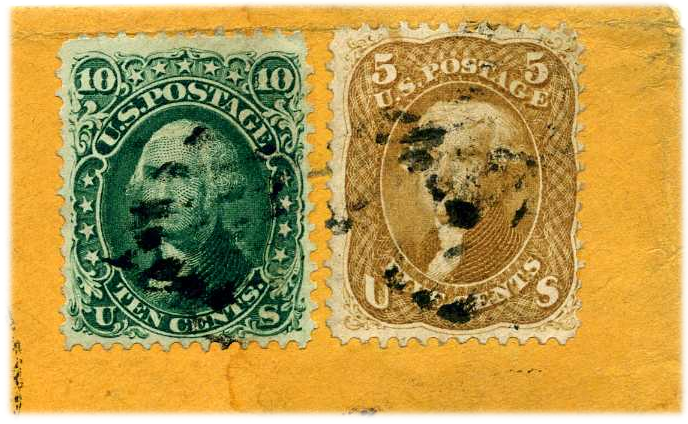
One possible explanation is that the sender ended up sending the seeds at the much more expensive latter rate (3 cents per 1/2 ounce). If that were true, this letter weighed more than 2 ounces and no more than 2 1/2 ounces. You could then argue that the uneven surface provided by seeds inside the envelope made it difficult to apply a cancellation to the stamps.
I mean. You could argue that if you really wanted to.
However, I suspect you would be wrong.
Instead, I believe this was an envelope that held seeds and was sent by the special rate. The stamp (or maybe stamps) that originally paid the postage fell off of the envelope at some point in time. Notice the staining below the 10-cent (green) stamp. That sort of stain would normally be left by a liquid of some sort. And the postage stamp doesn’t appear to show similar issues.
Sadly, it is likely that someone got creative and added some stamps to make the cover more attractive (and possibly more valuable if they could pass it off as genuine).
In other words, the stamps did not originate on this cover.
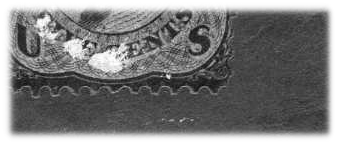
I turned the image into grayscale and then I inverted the colors (black becomes white and darker colors become lighter colors). This makes it easier to see that there is some cancellation ink well below the five-cent stamp. And, if you look very closely, you will see a shadow where the original stamp was probably located when this cover was mailed.
Postal historians often look for postmarks that “tie” a stamp to a cover to help confirm that they originated. In this case, there are no postmarks that provide that evidence. Even a stain on the envelope does not tie one of the stamps.
While I will not show the back of this cover today, someone (likely a collector or dealer many years ago) put a card into the envelope to stiffen it. Then, they sealed the envelope shut to make it difficult to explore things further. This actually makes it feel even more likely that someone was fabricating a fantasy of some sort.
Personally, I’m quite saddened by this because I would find a properly paid example of the seeds and cuttings postage rate to be an excellent item. I would have happily dove into the relevant history of Mound City, which was an important naval depot for the Union. I might have even been motivated to chase down John Finley Utz (1838 - 1921), long-time resident of Delaware County in Ohio.
And, perhaps, one day I shall. Just not today.
Push seeders are still a thing
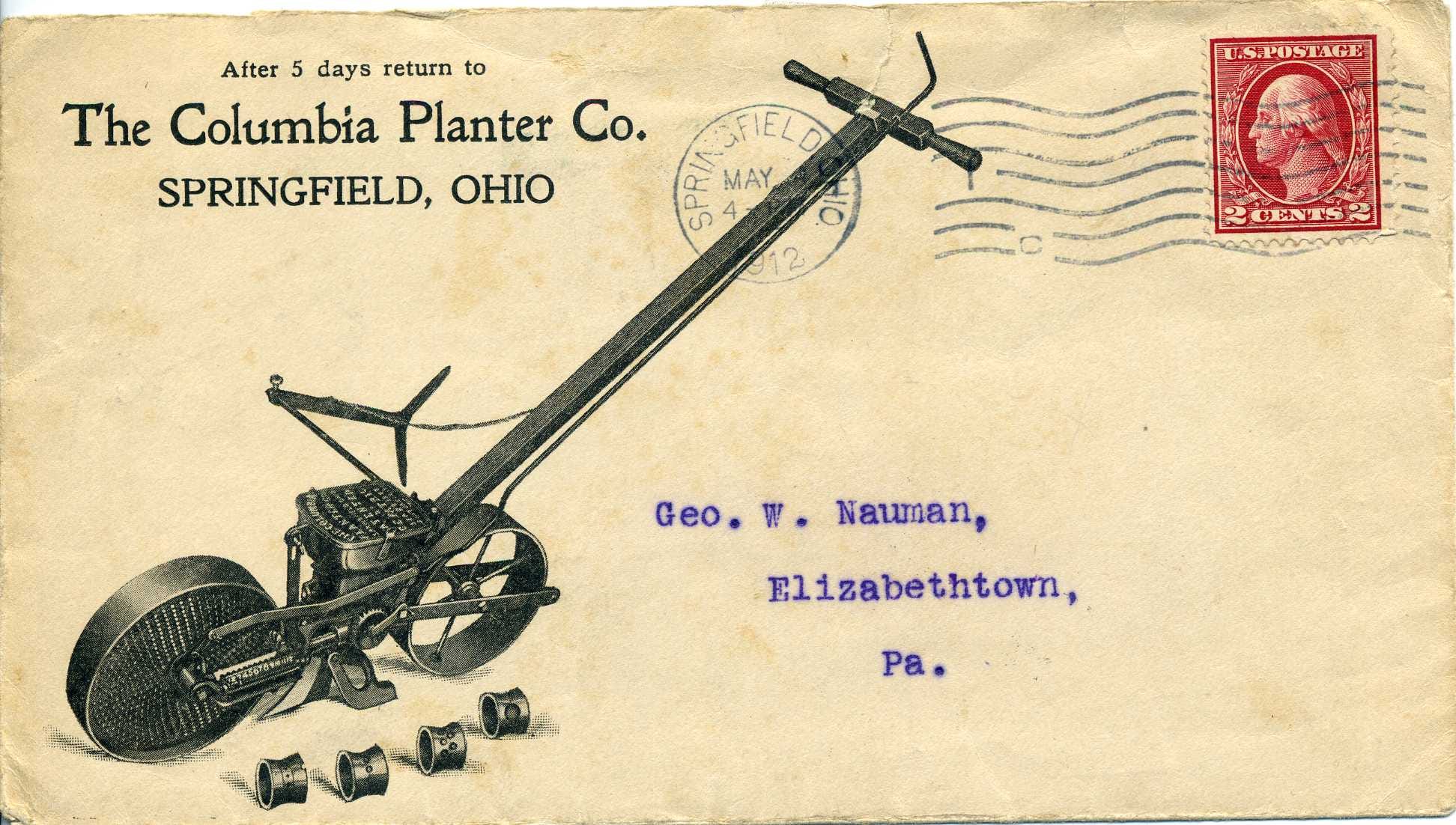
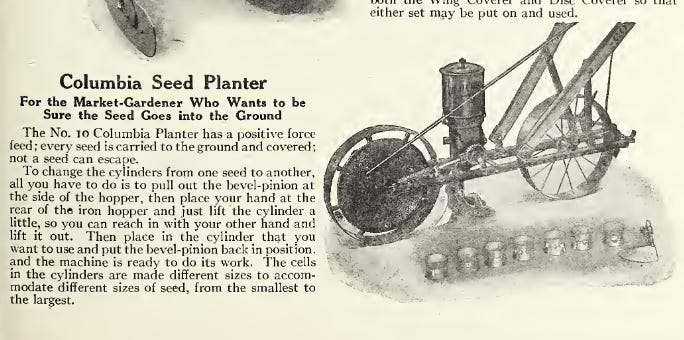
I’m going to close today’s article with a nice illustrated advertising cover from 1912 that features a push seeder. This technology continues to be relevant for small to medium-sized vegetable producers. You can actually see several similarities to this 1912 planter if you check out a Jang JP-1 seeder or even an Earthway.
We have actually used an Earthway and a European Push Seeder in the last week at the farm.

A new Earthway seeder would cost a person about $140 and a Jang would run about $550 in today’s world. How much do you suppose the Columbia Planter Company charged for the kit shown on the envelope?
I can actually answer that question. I’ve got the receipt, which was still in the envelope.
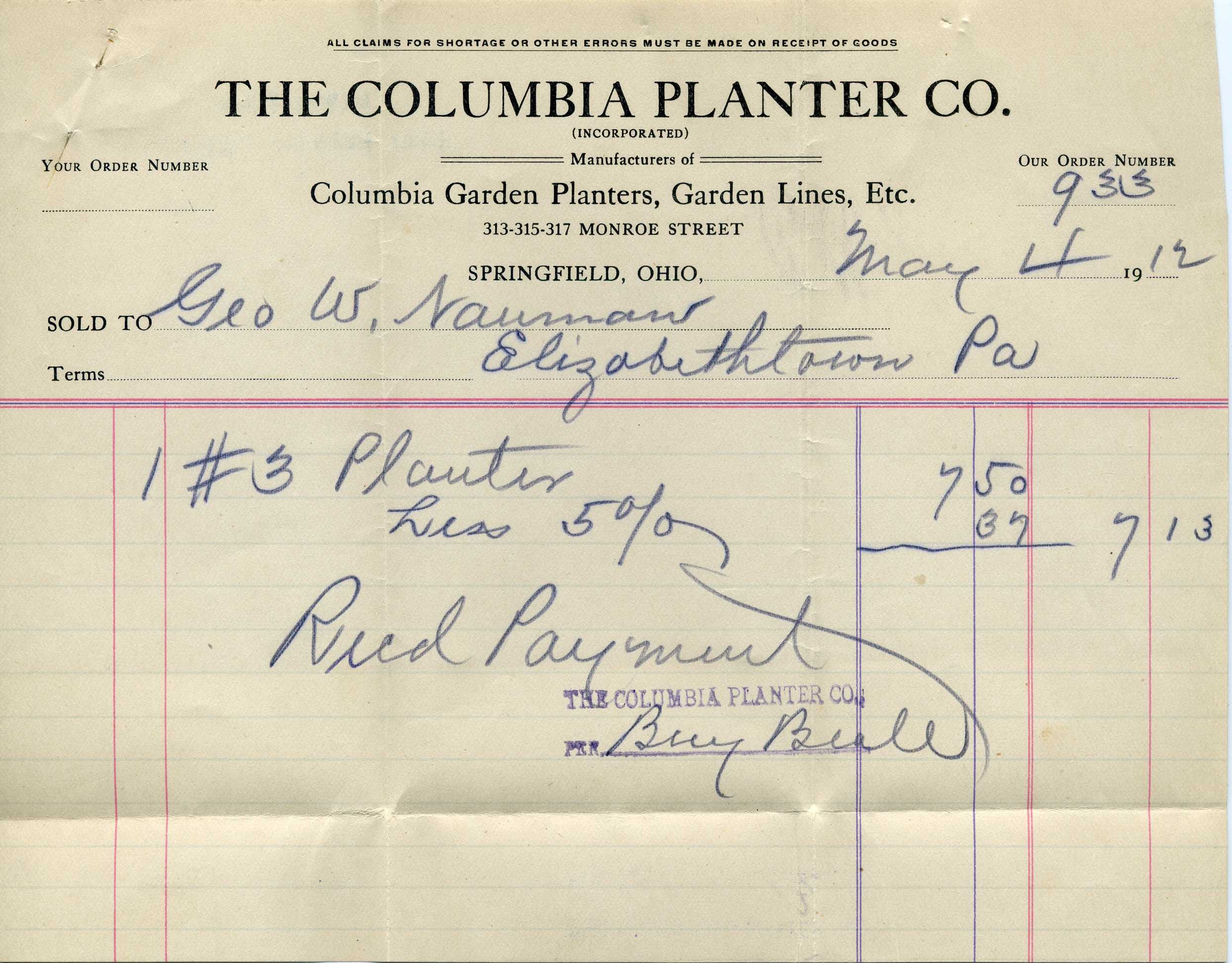
This is just a friendly reminder that the contents can help to bring a piece of postal history alive.
The Columbia #3 Planter cost $7.50. but, after a generous discount of 5% only $7.13 was required. There appears to be no line item for shipping.
Another point of comparison. Our Earthway seeder is constructed out of hard plastic. It’s shipping weight would be somewhere in the neighborhood of 10 to 15 pounds. Our European Push Seeder is made of metal and is significantly heavier. I would guess it’s shipping weight with all of the seed plates would be around 25 to 30 pounds.
How about the Columbia Planter? I guess we could look at the railroad lading bill that was ALSO in this envelope.
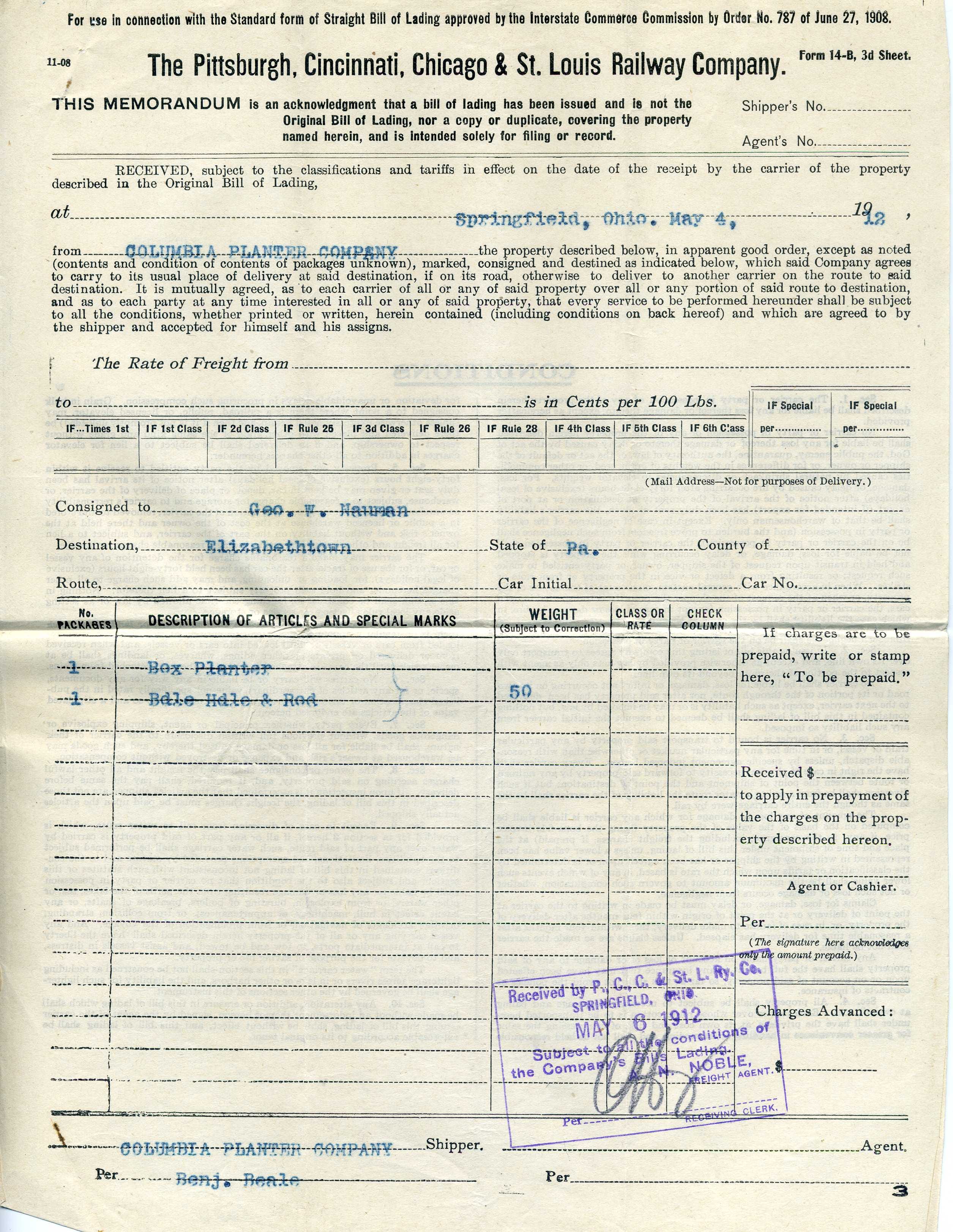
The shipping weight was fifty (!) pounds.
Well, they don’t make them like that anymore.
Thank you for joining me today! Have a fine remainder of your day and a wonderful week to come.
Postal History Sunday is featured weekly on this Substack publication. If you take this link, you can view every edition of Postal History Sunday, starting with the most recent publication. If you think you might enjoy my writing on other topics, I can also be found at the Genuine Faux Farm substack.
I did a Google® StreetView tour of Mound City. A lot of empty lots these days. If you have time to look around, there is a very cool little mailbox (LETTERS) on what might have been an old Illinois Central railroad structure near the railroad wye close to the Ohio River. https://maps.app.goo.gl/2JTko3ccR9WxNUmf7